

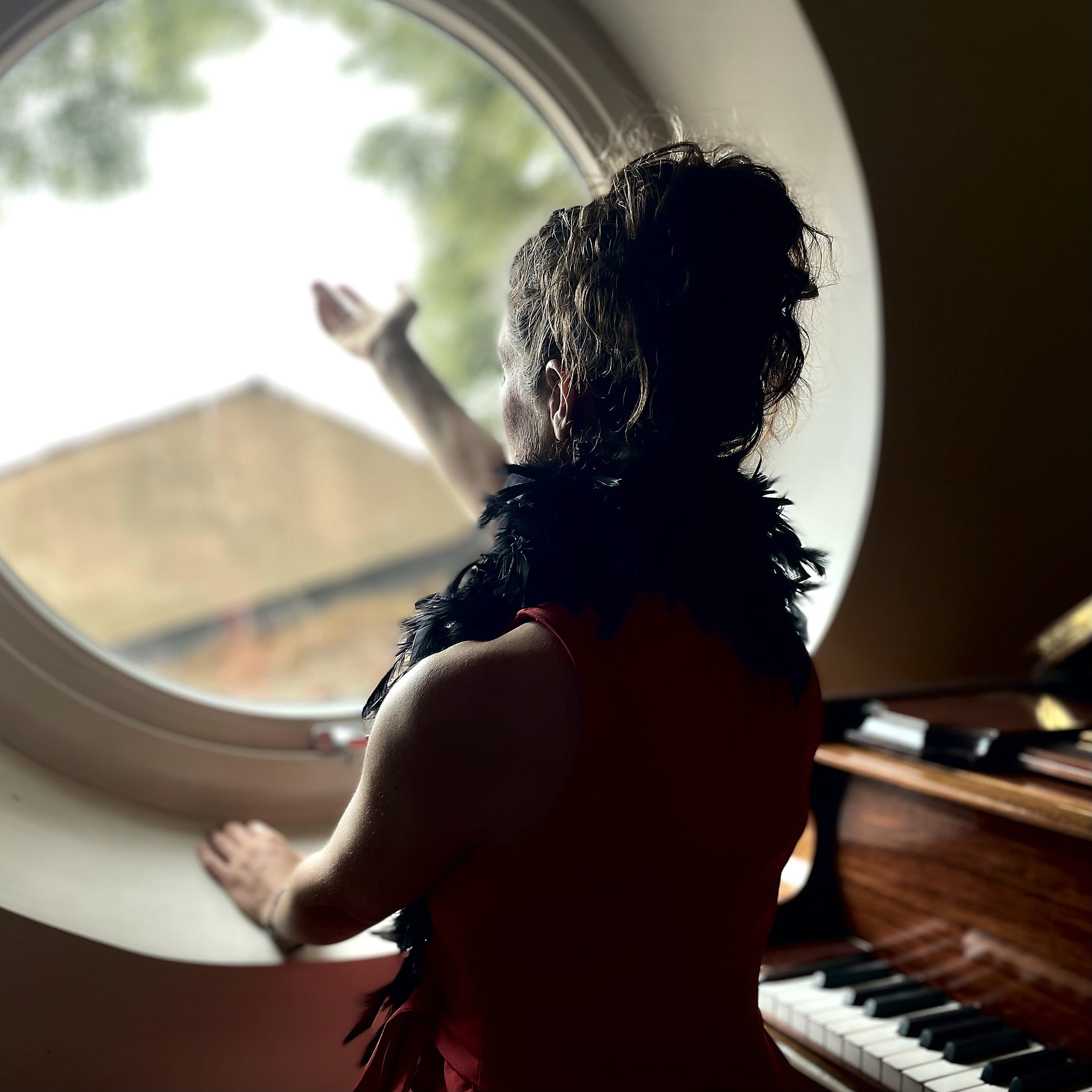
As a vocalist who teaches other singers how to improvise, you might imagine that I’ve had an empowered relationship with my singing voice for many years. Well in short, no! In fact, for years (like countless others I've met) I lived with an unmet longing to sing.
It wasn't that I didn't sing at all. I did sing, but mostly alone, in the privacy of my bedroom. I would lean over my guitar and give voice to a collection of cover songs. As much as I loved it, it wasn't enough.
The call of the inner artist
Inside of me, there was a vocal artist that yearned for more. I knew she was in there, because whenever I heard music she would be aching to sing all over it – to play around with the melody or maybe try harmonising. It never felt satisfying to simply listen.
I wanted to liberate my inner artist to be the free-flying bird that she was. I dreamed of singing at jams, around festival campfires, at social gatherings, even on the stage. I wanted to sing with people, and around people. I wanted to create and sing my own music, so that my soul could finally break forth into all the colours of her full expression.
Fortunately, I had not experienced the trauma that an incredible number of people have, of being told (often at a very tender, vulnerable age) that they ‘can’t sing’. But still... my voice was scared. Really scared. I believed I didn't know enough about music to write songs. And I suffered from crippling performance anxiety.
From fight or flight to freeze
I remember one time – probably towards the end of 2012 – I was at an open mic night with my then boyfriend, who was one of the organisers of the evening. He put my name down for a performance slot without telling me. The compere announced my name, handed me a guitar and suddenly there I was in the hotseat, palms sweating and heart pounding. Halfway through the song my fear had built up to such an intensity that I simply stopped – my fingers wouldn't move any more, my voice wouldn't come out. My system had gone into freeze.
That’s pretty much how singing with, or in front of, others had showed up in my life for more than a decade. My voice was tremulous if it emerged at all. But there was also this intense longing.
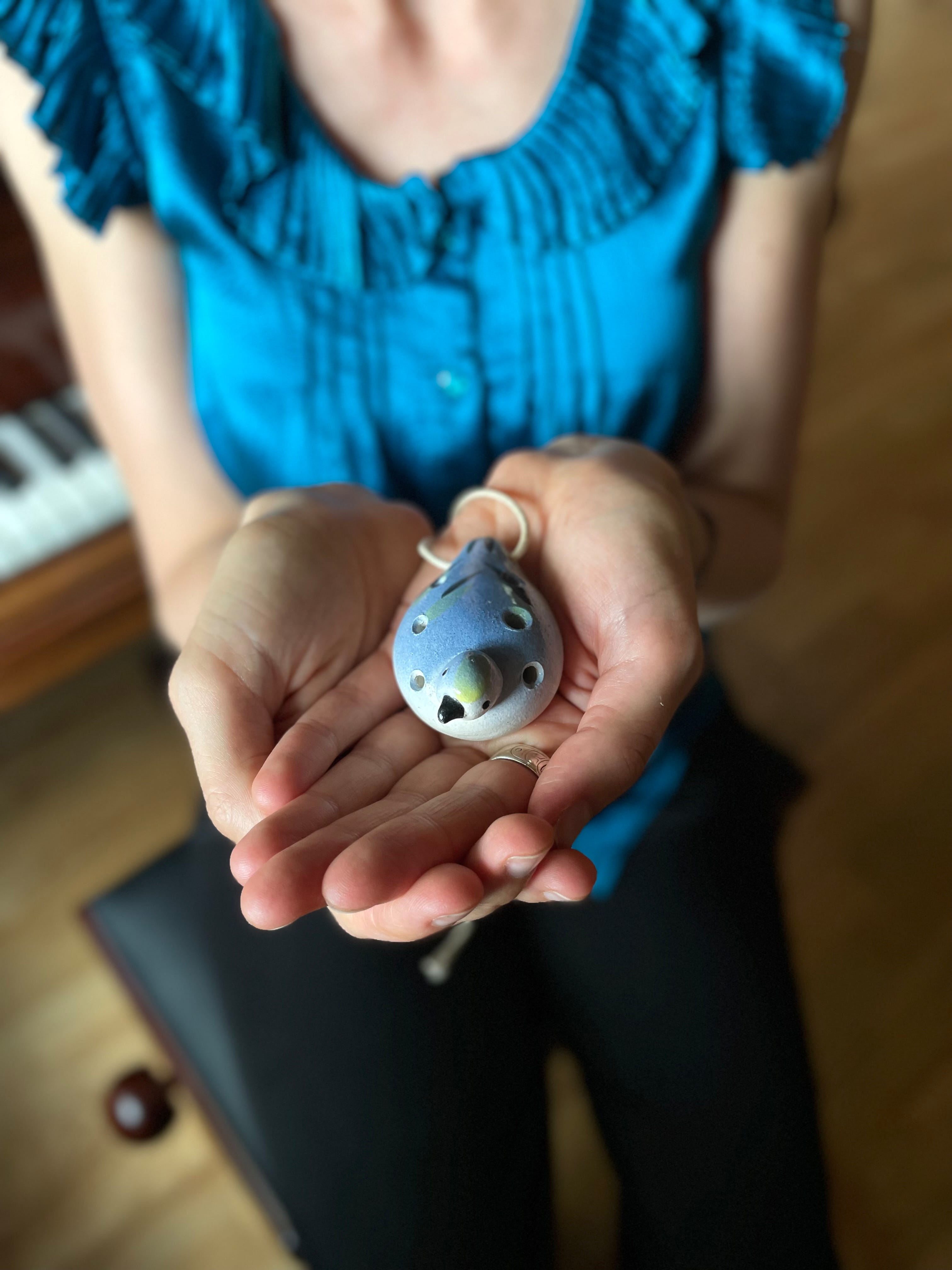
It's as if the wild songbird that lived inside me was locked into a cage, and I didn't know how to break her out of it.
Then suddenly, completely out of the blue and about five years after the open mic freeze, life threw me on a path to setting my voice free.
YES to vocal improvisation
In 2017 I picked up a brochure at an adult education centre and saw a listing for a vocal improvisation workshop. Reading those two words ‘vocal improvisation’, I immediately felt a YES, which came straight from the core of me.
To have the freedom to improvise, to be creative with my voice – this was exactly what I wanted!
I turned up for the workshop excited and nervous, only to be told that it had been cancelled at the last minute. But a seed had been planted. A few short weeks later I found myself on my way to a vocal improvisation and songwriting retreat, held at the beautiful wild estate of Embercombe in Devon.
I almost didn’t go. I was worried that I would be completely out of my depth – that I wouldn’t be able to write a song, or come up with any improvisation. I imagined that everyone else would be seasoned songwriters, and that I would lag behind. My mind came up with every reason why I couldn’t afford to take the time out.
In the end, my longing was stronger than my fear. Three days before the retreat, I signed up, taking the last available place. It was to be a life-altering moment.
It was on this retreat that I had my first taste of Collaborative Vocal Improvisation (CVI) – a magical art form in which a group of singers co-create a cappella music on the spot. From Briony Greenhill, I learned forms or ‘ways into’ CVI which had been developed by improvising vocalist Rhiannon and other members of Bobby McFerrin’s Voicestra in the USA. The key skill I came away with was how to make up a repetitive musical phrase, or vocal loop, which could be used as a building block to create music in layers. It was a total gamechanger!
Making up a whole song had felt overwhelming. Creating a one-bar musical phrase was accessible and achievable. It unlocked something in me. Musical ideas started to flow through me thick and fast. On that retreat, supported by Isolde Lachlan who was co-facilitating with Briony, I wrote my first song. I was finally doing it – I was composing.
There remained one ‘small’ issue: I continued to be totally overwhelmed with fear every time I was asked to improvise in front of the group. Back came the racing heart, sweaty palms and tight throat. The road to transforming this response was long, but I had fallen in love with improvisation, and I was committed.
I took the next, big step and signed up for a year-long course in Collaborative Vocal Improvisation with Briony. I ended up studying CVI for three years.
How I finally released my songbird
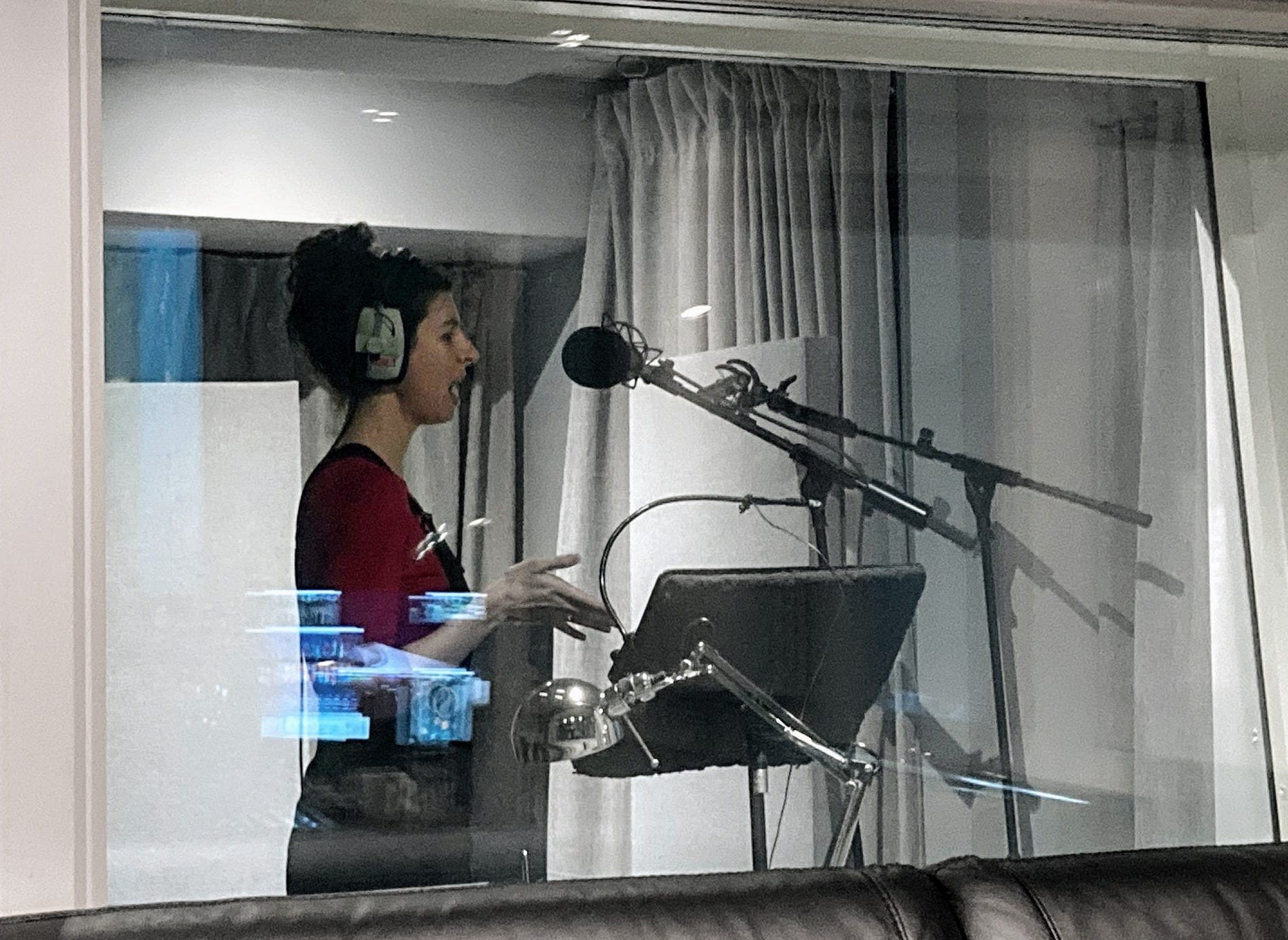
Within four years, my relationship with my voice and music had truly undergone a transformation. I had improvised as a soloist in more than one performance, including in front of a 100-strong crowd. Supported by Claire Housego (who I can't recommend highly enough as a piano coach for singers) I had learned to write and arrange my own songs on piano. I had also recorded vocals for the soundtrack of a multi-award-winning short film in a top-tier professional studio. A few short months after that, I started to facilitate Collaborative Vocal Improvisation.
How had I achieved this? What made the difference for me was learning CVI in combination with a range of other skills and experiences that had helped to revolutionise my body's response to improvising and performing, as well as showing me that I could be musically creative.
Plus I had the most incredible support! I’d sought input from vocal and life coaches (Bex Baxter and Lise Huber), embodiment teachers (including Erika Chalkley) and a somatic psychotherapist (Madelanne Rust-D’Eye). All of these women have wisdom and gifts that are rare to find. I took my learnings from them and started to practise:
Singing with improvisation, as well as vocal technique
Embodiment tools, including breathing techniques, posture, movement, visualisation and gaze
By investigating my fear of singing in front of others through journalling and coaching conversations, I began to understand where my performance fears might have originated, and to have more self-acceptance and compassion for my struggles. I then began to expand my comfort zone for singing, improvising and performing in small, manageable steps.
Perhaps you see yourself in my story?
If you can relate to any aspect of my story, please know that finding freedom in your singing voice, and overcoming blocks to your creativity, is equally possible for you. If you've got a longing to sing, to be creative with music, then trust it. It's the only indicator and permission you need.
No matter what kind of musical experiences you've had, or what people may have told you about your voice, you can always trust your longing. I know – not just from my own experience but from having worked with a number of students – that great shifts can happen when you have motivation, the right tools and the right support.
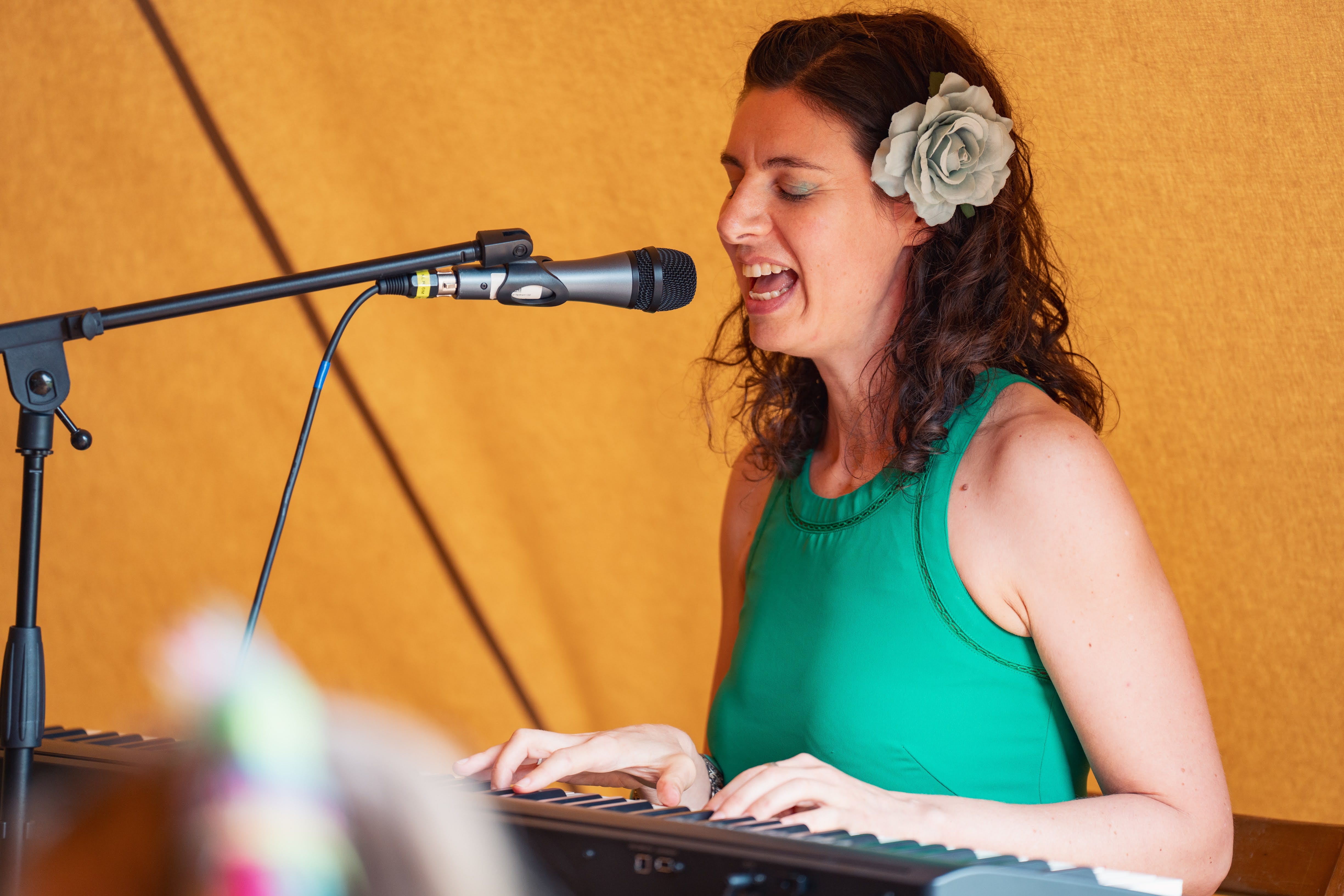
And I can't end this story without saying, look, I’m still on this journey too. It isn't as if I've arrived at a final destination! Right now I'm preparing for my first solo performance at a festival, where I'll be performing my own songs on piano. In practice sessions in front of friends, I've felt underconfidence creep back in, and my voice hasn't been as reliable technically as it is when I'm alone in my practice space. I'm not terrified like I used to be, but nerves are still having an impact.
However, I know how to use my voice itself as a tool to open up a new way of experiencing performance. The beautiful truth is that singing and improvisation can become a way for us to resource ourselves. Through the voice we can tune into our bodies, nourish them, actually calm our fears and connect deeply with others. All of which is deeply and incredibly healing.
I've launched this publication, Setting your Songbird Free, because I've got so much to share on these themes. My learnings really shouldn't remain a secret!
So if you're a songwriter who'd love to enter the creative flow with ease, reconnect with your innate confidence, and be fully in your artistry, then please stay tuned. If you haven't already, do subscribe, because there's so much more to come.